Tanzania is globally recognised for its extraordinary natural heritage. Over 40% of the country’s land area is designated as protected land, amounting to approximately 387,000 – 410,000 square kilometres. To put this into perspective, this collective area is larger than the United Kingdom (243,000 sq km). Within these vast wilderness areas lie rainforests, wetlands, rivers, mountains, savannahs, and some of Africa’s most iconic wildlife populations.
The national responsibility to safeguard these ecosystems falls largely between two government institutions, the Tanzania National Parks Authority (TANAPA) and the Tanzania Wildlife Management Authority (TAWA).
The Tanzania National Parks Authority (TANAPA), which manages 24 national parks, covering roughly 99,000 square kilometres. These parks are strictly protected areas where hunting is prohibited, and conservation is closely tied to photographic tourism.
Beyond national parks, other protected areas are categorised as game reserves and fall under the management of the Tanzania Wildlife Management Authority (TAWA). Game reserves allow regulated hunting and tourism activities under Tanzanian law. Additionally, Wildlife Management Areas (WMAs) are community-based conservation zones established on village lands overseen by TAWA to promote sustainable resource use while improving rural livelihoods.
Together, these institutions fall under the Ministry of Natural Resources and Tourism and are tasked with protecting vast landscapes that are often incredibly remote, infrastructure-poor, and logistically demanding. Some areas are accessible only by rough seasonal roads, river crossings, or air. The sheer scale and remoteness make it virtually impossible for government authorities to operate alone without strategic partnerships and collaborative conservation models.
Focusing on Under-Protected Frontiers

Six Rivers Africa (SRA) directs its conservation efforts toward these underserved southern landscapes, particularly in the former hunting blocks that were recently incorporated into national parks.
In Ruaha National Park, SRA focuses on the Usangu sector, an ecologically significant wetland and floodplain system. In Nyerere National Park, SRA operates primarily in the Msolwa and Ilonga sectors, critical habitats that include riverine and wetland ecosystems.
Although these areas are now formally national park territory, their history as hunting blocks means infrastructure for photographic tourism and modern park protection has been limited. Their remoteness makes them attractive targets for poaching and illegal activity, threatening both biodiversity and long-term tourism potential.
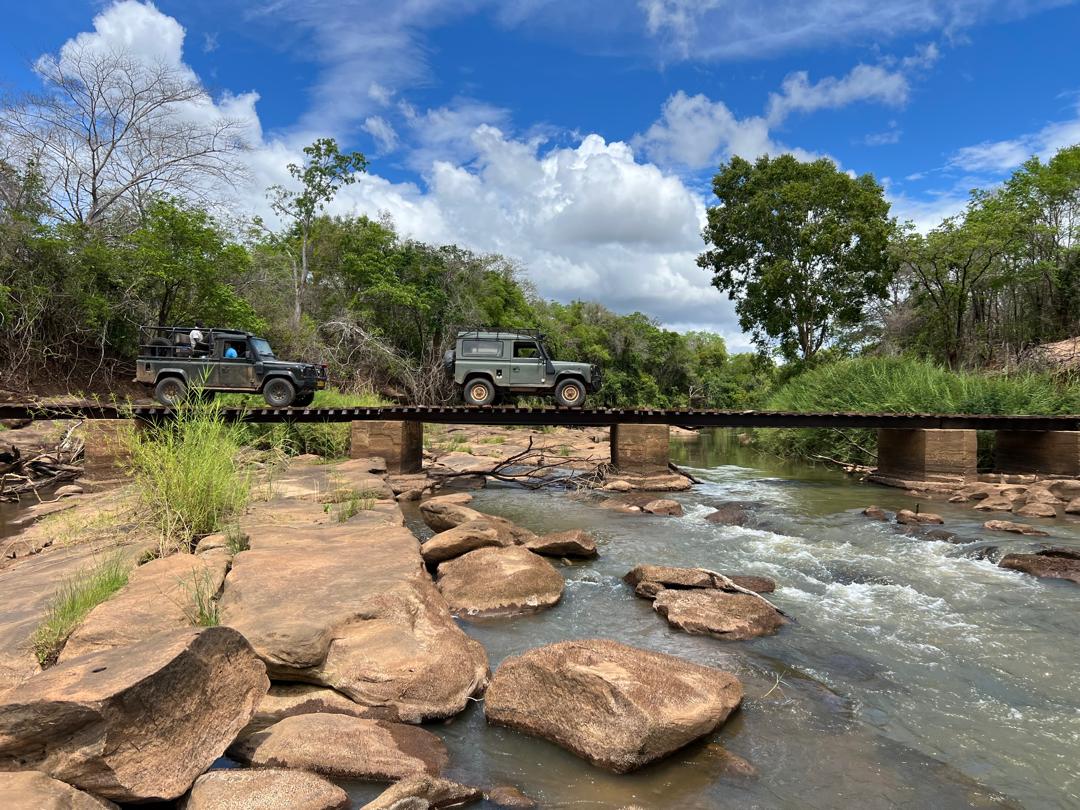
To address this, SRA has invested heavily in foundational protection infrastructure. Permanent protection camps have been established to ensure consistent ranger presence in areas that were previously difficult to monitor. Road networks have been constructed and rehabilitated deep within these sectors to improve year-round access, while bridges and river crossings have strengthened operational mobility.
Communication towers have been installed to enhance coordination and response times among rangers, and ferry systems have been introduced to maintain patrol access during the wet season when rising waters can otherwise isolate entire zones.

Restoration and the Long-Term Vision
Protection is only the first step. The ultimate objective is ecological restoration and the revival of sustainable tourism.
In both Usangu and the Msolwa–Ilonga sectors, SRA is working closely with government authorities to assess biodiversity through structured ecological audits, helping determine the recovery potential of key species and habitats. Efforts are underway to strengthen anti-poaching capacity and enhance aerial and ground surveillance support, while improving ranger logistics and rapid response capabilities. At the same time, groundwork is being laid for responsible tourism infrastructure that can support long-term conservation financing.
A Tanzania-Led Approach to Restoration
SRA’s approach to conservation follows a proven, data-driven lift-and-shift model, building on the lessons and experience gained through its restoration work in the Usangu wetlands of Ruaha National Park. Instead of starting from scratch in every new landscape, the organisation applies strategies that have already shown results, adapting them to the specific ecological and operational realities of each area.
This approach recognises that conservation works best when it is practical, collaborative, and locally grounded. It brings together ecosystem protection, community involvement, and strong partnerships with government authorities to ensure that restoration efforts are sustainable in the long term. In line with this, SRA works closely with the Ministry of Natural Resources and Tourism (MNRT) to cooperate and co-develop strategies that complement national conservation priorities.